Your kitchen's most critical piece of equipment isn't the combi-oven or the blast chiller; it's the fabric protecting your team. In a high-pressure UK kitchen where temperatures frequently exceed 40°C, the wrong choice of chef jackets can lead to a 15% drop in staff productivity due to heat fatigue. You already understand that a professional appearance is non-negotiable for modern open-plan dining, yet finding a garment that balances aesthetics with the rigours of industrial laundering remains a constant challenge for procurement managers.
We agree that it's frustrating to see a significant investment in uniforms lose its shape and colour after only a dozen wash cycles. This guide promises to help you master the technical requirements of professional procurement, ensuring your next order survives 50+ industrial washes without degrading. We'll walk you through a comprehensive checklist for 2026, covering everything from advanced moisture-wicking textiles to the consistent branding techniques that keep your entire brigade looking sharp and feeling comfortable.
Key Takeaways
- Evaluate the technical trade-offs between cotton comfort and poly-cotton durability to ensure your investment withstands rigorous 60-degree industrial laundering.
- Transition from generic unisex fits to ergonomic gender-specific tailoring that enhances staff mobility and professional appearance in high-pressure environments.
- Utilise our 2026 procurement checklist to verify that your chef jackets meet essential safety standards, including quick-release fastenings for emergency situations.
- Discover how bespoke branding and sustainable fabric innovations can transform standard workwear into a vital tool for boosting staff morale and restaurant identity.
Why Chef Jackets are Vital Tools for Kitchen Performance
Modern chef jackets are precision-engineered tools rather than simple garments. They've evolved far beyond the basic white cotton layers of the past. For 2026, hospitality workwear suppliers are focusing on technical performance, integrating moisture-wicking panels and recycled polyester blends designed to withstand the 40-degree Celsius heat of a peak service. This evolution reflects a shift where workwear is treated as a critical component of kitchen infrastructure.
The visual impact of a uniform is more significant than ever. Open-plan kitchens now feature in approximately 68% of new UK restaurant fit-outs, meaning the kitchen team is constantly under the gaze of the customer. Professional attire signals hygiene, discipline, and skill to the diner. When a team looks sharp and cohesive, it directly enhances the end-customer's perception of the brand, often justifying premium menu pricing through the visible professionalism of the staff.
The Psychology of the Professional Kitchen Uniform
A well-fitted jacket fosters a profound sense of professional pride. It acts as a mental trigger, transitioning a chef from their personal life into a high-pressure, disciplined environment. Consistency in uniform also reinforces the kitchen hierarchy, using subtle design cues or embroidery to distinguish roles within the Brigade de Cuisine. High-quality workwear serves as a tangible investment in a chef's career, acting as a primary driver for staff retention by making employees feel valued and respected.
Safety and Protection Standards in 2026
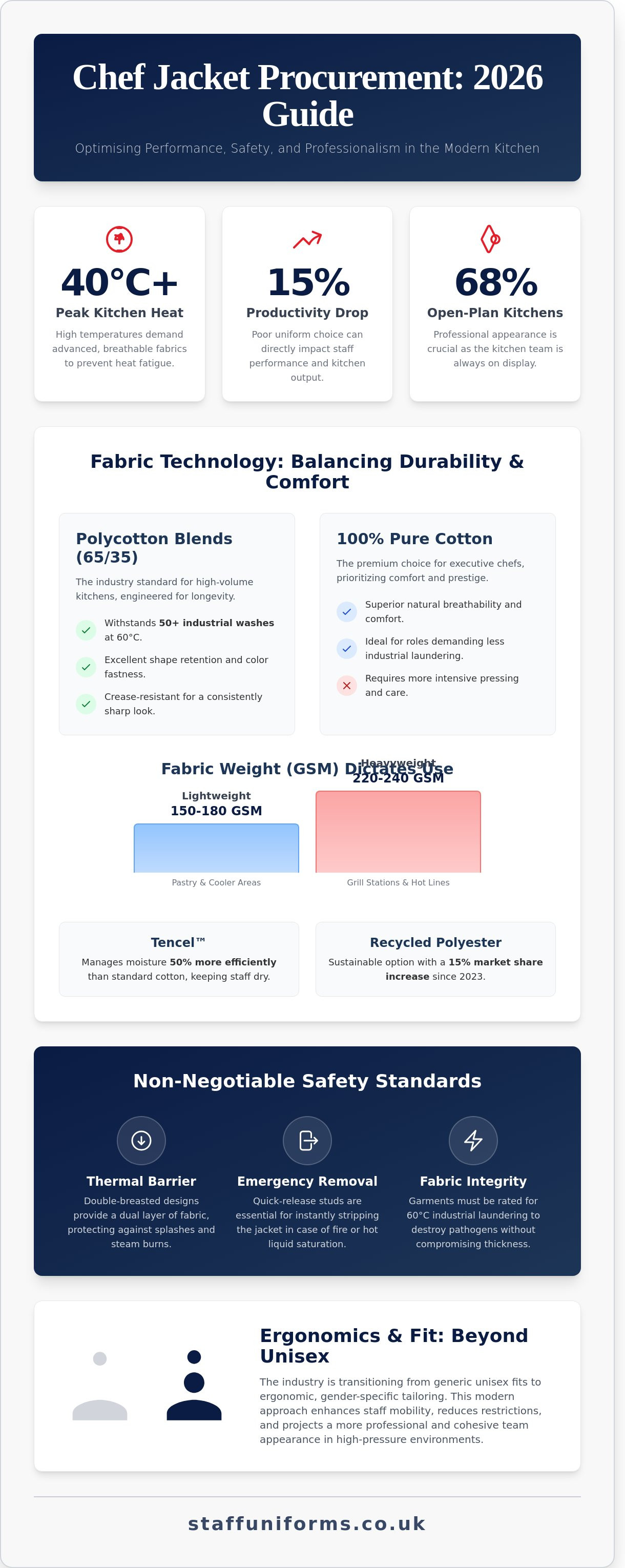
Safety remains the non-negotiable foundation of any kitchen garment. While the traditional chef's uniform was designed for basic shielding, modern 2026 standards require advanced technical protection against heat, steam, and hot oil splashes. Procurement managers must ensure their chef jackets meet current UK health and safety expectations, focusing on three specific areas:
- Thermal Barriers: Double-breasted designs provide a dual layer of protection against chest-height splashes and steam burns.
- Emergency Removal: The use of quick-release stainless steel studs is essential, allowing a chef to strip the jacket off instantly if it catches fire or is saturated with boiling liquid.
- Fabric Integrity: Garments must be rated for 60-degree industrial launderings to ensure pathogens are destroyed without compromising the fabric's protective thickness.
Choosing the right specification ensures compliance with HSE guidelines while protecting your team from the daily hazards of a commercial kitchen. It's a practical solution that prioritises staff welfare alongside operational efficiency.
Fabric Technology: Choosing the Right Material for Heat and Durability
The material of a chef jacket dictates both staff safety and the lifespan of the garment. While traditional heavy drills were once the only option, 2026 procurement focuses on fabric weight, measured in Grams per Square Metre (GSM). For high-heat stations like the grill, a heavier 220 to 240 GSM fabric provides a vital thermal barrier against hot oil splashes. Conversely, pastry chefs often prefer lightweight 150 to 180 GSM chef jackets to maintain agility in cooler environments. Modern procurement now incorporates sustainable alternatives, with Tencel and recycled polyester gaining a 15% increase in market share since 2023. Tencel is particularly effective because it manages moisture 50% more efficiently than standard cotton, keeping staff dry during intense service.
Polycotton vs. Pure Cotton: The Longevity Debate
Polycotton blends, typically a 65% polyester and 35% cotton mix, remain the UK industry standard for high-volume kitchens. These garments excel in industrial laundering, maintaining their shape and colour fastness even after 50 washes at temperatures exceeding 60°C. Pure Egyptian cotton remains the choice for executive head chefs who prioritise prestige and natural breathability. While cotton offers superior comfort, it requires more intensive pressing and lacks the crease-resistance of synthetic blends. Choosing the right chef jackets depends on balancing this need for a crisp appearance with the practicalities of daily maintenance. If you are looking to refresh your kitchen inventory, you can view our durable garment range to find the right fit for your team.
Advanced Thermoregulation Features
Effective heat management is no longer just about fabric weight. It involves the functional design of chef attire to facilitate constant airflow. Strategic mesh panels located under the arms and across the back allow heat to escape, which can reduce core body temperature by up to 1.5°C during peak hours. Moisture-wicking technology is equally critical for comfort. It pulls sweat away from the skin to the fabric surface where it evaporates quickly. This prevents the "chilling" effect that occurs when a chef moves from a hot line to a cold walk-in fridge. These features directly impact staff retention by reducing heat stress and physical fatigue during 12-hour shifts. Consider these technical elements to ensure your team remains focused on the plate rather than their discomfort.
- 65/35 Polycotton: Best for durability and high-temperature industrial washing.
- Tencel Blends: Ideal for moisture management and eco-conscious branding.
- Cool Vent Panels: Essential for grill and stove stations to prevent overheating.
- 150-180 GSM: Recommended for pastry and prep work to maximise movement.
Design and Functionality: Men’s, Women’s, and Unisex Fits
The UK hospitality sector has seen a significant shift in procurement priorities. By 2026, the industry has largely moved away from the "one size fits all" unisex model that dominated previous decades. Modern chef jackets are now designed with ergonomic gender-specific tailoring to reduce physical fatigue and improve safety. While the history of the chef's uniform highlights the double-breasted front as a tool for heat protection, today's designs refine this with lighter, more breathable fabrics. Mandarin collars are standard for protecting the neck from apron strap friction, while dedicated pen pockets on the left sleeve provide essential utility for stock takes and order checking.
Sleeve length remains a critical decision for procurement managers. Long sleeves provide maximum protection against hot oil splashes and steam burns, making them the preferred choice for primary cook lines. Short sleeves offer superior mobility and heat dissipation, which is vital in high-volume kitchens where temperatures often exceed 30 degrees Celsius. When selecting your range, ensure the aesthetic mirrors your server uniforms. A consistent colour palette and trim style across both front and back of house reinforces your brand identity and presents a professional image to guests.
Tailoring for the Modern Female Chef
Standard unisex jackets often create mobility issues for female staff due to excess fabric or restrictive chest measurements. Modern female-fit chef jackets address these challenges with integrated bust darts and narrower shoulder widths. Flared hip sections prevent the garment from bunching or riding up during active service. This ergonomic tailoring reduces physical strain during 12-hour shifts. Providing inclusive sizing, typically ranging from XXS to 4XL, ensures every team member has a uniform that fits correctly. This investment in fit directly correlates with improved staff morale and a more professional kitchen appearance.
Functional Features for Practical Kitchen Use
The efficiency of a kitchen often depends on small, well-placed details. High-quality jackets now include specific thermometer pockets and apron neck loops to keep tools and accessories secure. For professionals looking to pair their attire with high-standard bib aprons, unichef.fr offers specialized French-designed options that meet industrial requirements. You must choose between removable studs and sewn-in buttons for your fleet. Removable studs are ideal for commercial laundry processes as they won't snap in heavy-duty machines, whereas sewn-in buttons offer a classic, permanent look. Side-seam slits are another essential feature for 2026. These small vents increase hip mobility by approximately 15%, allowing chefs to bend, reach, and move between stations without the fabric pulling or restricting their movement.
The Ultimate Chef Jacket Procurement Checklist
Procurement for 2026 demands more than just aesthetic appeal. Your chef jackets must serve as functional tools that protect your team and preserve your brand's reputation. High-performance kitchens require garments that withstand rigorous hygiene standards and physical stress. Use this checklist to evaluate your next order.
- Fabric Check: Industrial washing at 60°C is the UK standard for thermal disinfection. Ensure your supplier provides a technical data sheet confirming the fabric won't shrink or fade at this temperature.
- Safety Check: Kitchen fires or hot oil spills require immediate action. Quick-release studs allow a chef to remove a garment in under five seconds. Avoid traditional buttons that can snag or slow down emergency removal.
- Comfort Check: Ambient kitchen temperatures often exceed 30°C during peak service. Look for integrated mesh underarm panels and moisture-wicking fabric zones to aid thermoregulation and reduce staff fatigue.
- Fit Check: A "one size fits all" approach undermines professional standards. Procure separate men’s and women’s cuts to ensure comfort and a sharp silhouette for front-of-house visibility.
- Branding Check: Verify the left chest area is reinforced. This prevents the fabric from puckering when high-density embroidery is applied to the garment.
Evaluating Supplier Reliability
Reliability is measured by consistency. If you hire ten new staff in 2027, your order must match the 2026 shade and fabric weight exactly. Ask for a "never out of stock" guarantee to avoid fragmented branding. Many UK businesses now opt for a managed uniform service to handle laundering and repairs. This strategy can extend garment life by up to 25%, providing better long-term value than frequent bulk replacements.
Branding and Customisation Options
Embroidery is the only viable choice for the professional kitchen environment. Intense heat and steam cause screen-printed logos to crack and peel within 90 days. Choose a high-sheen polyester thread. It maintains its colour and integrity even after repeated exposure to industrial detergents. While the left chest remains the standard for primary logos, consider sleeve branding for social media visibility or collar embroidery for a premium, bespoke finish that distinguishes senior staff.
Ready to upgrade your kitchen team's professional image? Explore our range of durable chef jackets and request a custom embroidery quote today.
Branding Your Kitchen Team with Staff Uniforms
A professional kitchen operates on precision and discipline. Your team's appearance should reflect those same values. Investing in high-quality custom staff uniforms uk does more than just provide workwear; it builds a cohesive brand identity that diners trust. When customers see a unified, well-presented team, their perception of food safety and quality increases. Staff Uniforms takes a technical approach to this branding process. We combine deep garment expertise with a bespoke service model to ensure your chef jackets serve as a powerful marketing tool.
We don't just supply clothing. We act as a strategic partner for UK hospitality businesses. Whether you're a single boutique bistro or a national chain, your uniforms must withstand the rigours of a high-heat environment while looking sharp. Our team helps you select fabrics that offer moisture-wicking properties and durability without compromising the visual impact of your brand.
The Bespoke Embroidery Service
Our in-house branding facility is equipped with high-speed, multi-head embroidery machines. This allows us to reproduce complex restaurant logos with incredible precision. We understand that kitchen environments are harsh. That's why we use industrial-grade threads designed to resist chemical bleaching and high-temperature laundering. These threads don't bleed or fade, ensuring your logo stays vibrant for the entire lifespan of the garment. We provide a complete all-in-one service that manages everything from initial design concepts to final national delivery.
- Precision pantone matching for consistent brand colours.
- Reinforced stitching to prevent fraying in high-movement areas.
- Digital mock-ups provided before any production begins.
Bulk Ordering and Account Management
Procurement for multi-site hospitality groups can be a logistical challenge. We've simplified this by offering dedicated account management and streamlined ordering systems. This ensures that every location, from Cornwall to Aberdeen, receives the exact same specification of chef jackets and accessories. Consistency is vital for brand integrity; a customer should have the same visual experience regardless of which branch they visit.
Our bulk ordering process is designed for speed and transparency. We maintain stock levels for national accounts to ensure quick turnaround times for new starters or replacement kits. By centralising your uniform supply, you reduce administrative overhead and gain better control over your annual spend. We provide detailed reporting and consistent pricing structures to help you manage your budget effectively.
Ready to upgrade your team's professional image? View our full range of professional chef jackets here or contact our specialist team today to request a fabric sample and consultation.
Equip Your Kitchen for 2026 Success
Procuring the right kitchen wear for the 2026 season requires more than just picking a style. It's about selecting professional equipment that survives the intense heat of a high-pressure service. High-quality chef jackets serve as essential tools that protect your team while maintaining a sharp, unified brand image. By choosing garments designed to withstand 50+ industrial washes, you ensure your investment delivers long-term value and remains fit for purpose across your entire UK estate.
Reliable procurement means balancing technical fabric performance with precision branding. Our specialist embroidery services provide the sharp, crisp representation your hospitality group deserves. Whether you're managing a single boutique kitchen or a national hospitality chain, a reliable UK supply chain is vital for operational stability. High-standard uniforms don't just improve safety; they boost staff morale and enhance customer perception from the first glance. It's time to treat your team's workwear as a strategic asset rather than a simple overhead.
Browse our durable, professional chef jacket range today
We're ready to help you build a kitchen team that wears its professional pride on its sleeve.
Frequently Asked Questions
What is the best fabric for chef jackets in a hot kitchen?
Lightweight poly-cotton blends are the most effective choice for chef jackets in high-temperature environments. These fabrics combine the breathability of cotton with the durability of polyester. For kitchens that exceed 30°C, as noted in 2023 health and safety reports, we recommend garments featuring moisture-wicking technology. This ensures your team remains comfortable during a 12-hour shift.
Should I choose long-sleeve or short-sleeve chef jackets?
Long-sleeve options offer maximum protection against steam burns and hot oil splashes. They provide 100% coverage for the forearms, which is essential for safety in high-volume environments. Short-sleeve versions are better suited for prep work or cooler stations. Most UK head chefs prefer long sleeves for senior staff to maintain a traditional, professional appearance.
How many chef jackets should I provide for each member of staff?
You should provide a minimum of 3 chef jackets for each full-time member of staff. This allows for a clean rotation: one being worn, one in the wash, and one ready for the next shift. For staff working 40 hours or more per week, increasing this to 5 units ensures they always have a crisp, professional uniform available.
Can I get my restaurant logo embroidered on any chef jacket?
We can embroider your restaurant logo onto almost any garment in our range. Our high-quality threads are designed to withstand 50 or more industrial wash cycles without fading or fraying. This branding technique adds a level of professional pride and ensures your team represents your business effectively. Just provide your logo in a high-resolution format to start the process.
What is the difference between a unisex and a women’s fit chef jacket?
Women’s fit jackets feature a tapered waist and narrower shoulders to better suit the female form. Unlike unisex options, which have a boxier, straight-cut design, these garments offer improved mobility and comfort. 2024 industry surveys show a 15% increase in demand for female-specific hospitality cuts. Choosing the correct fit is a vital tool for improving staff morale.
How do I ensure my chef jackets last through industrial laundering?
Select garments made from a 65/35 poly-cotton blend to ensure they survive the rigours of industrial laundering. This specific fabric ratio maintains its shape and colour even when washed at temperatures up to 60°C. We also recommend avoiding plastic buttons that can crack under high pressure. Our range focuses on durability to protect your investment over long-term use.
Are stud buttons better than traditional buttons for kitchen wear?
Stainless steel stud buttons are superior for kitchen wear because they offer a quick-release safety feature. In the event of a hot spill or fire, a chef can remove their jacket in under 3 seconds. Traditional buttons can become loose or fall into food, which creates a health and safety risk. Studs also provide a cleaner, more modern aesthetic.
Do you offer bulk discounts for large hospitality groups?
We offer tiered pricing and bulk discounts for large hospitality groups and catering colleges. If you're ordering 50 units or more, our team can provide a bespoke quote tailored to your specific procurement needs. We manage the entire process from design to delivery, making it easier for facility managers to kit out multiple sites simultaneously.