
A poorly fitted uniform costs your business far more than the initial invoice. Research from Management Today in 2023 revealed that 78% of UK professionals believe a cohesive team appearance directly impacts client trust levels. If your current corporate suits show visible thinning at high-friction points or lose their silhouette after six months of wear, you're facing a recurring tax on your bottom line. It's frustrating to invest in a premium look only to see it degrade through daily use and inconsistent laundering.
You understand that a team that looks sharp performs with more confidence. Yet, balancing the needs of diverse body types while maintaining perfect colour consistency across multiple bulk orders is a significant challenge. This guide provides the technical roadmap you need to build a durable, stylish, and cohesive brand identity for your entire workforce through 2026. We'll explore the specific garment technologies that ensure longevity and the procurement strategies that keep your maintenance costs low without sacrificing a bespoke aesthetic.
Key Takeaways
- Learn how technical fabric specifications like the Martindale Rub Test ensure your corporate suits provide the durability required for daily professional wear.
- Discover how to select a professional colour palette and a range of fits that enhance staff morale while maintaining a cohesive brand identity.
- Streamline your procurement with practical guides on conducting staff sizing exercises and using wardrobe management systems to track individual allocations.
- Distinguish between high-street fashion and uniform-grade garments to make informed investment decisions that lower your long-term replacement costs.
- Master the integration of your company branding through professional customisation services that bridge the gap between style and professional representation.
What are Corporate Suits: Defining Professional Standards for 2026
Corporate suits are specialised garments designed for daily professional use and brand representation. They aren't simply standard jackets and trousers. These items serve as a visual handshake for your business. While the History of the Business Suit traces its roots back to the 19th century, the 2026 standard focuses on technical performance and brand alignment. A high-quality corporate wardrobe ensures your team looks as capable as they are.
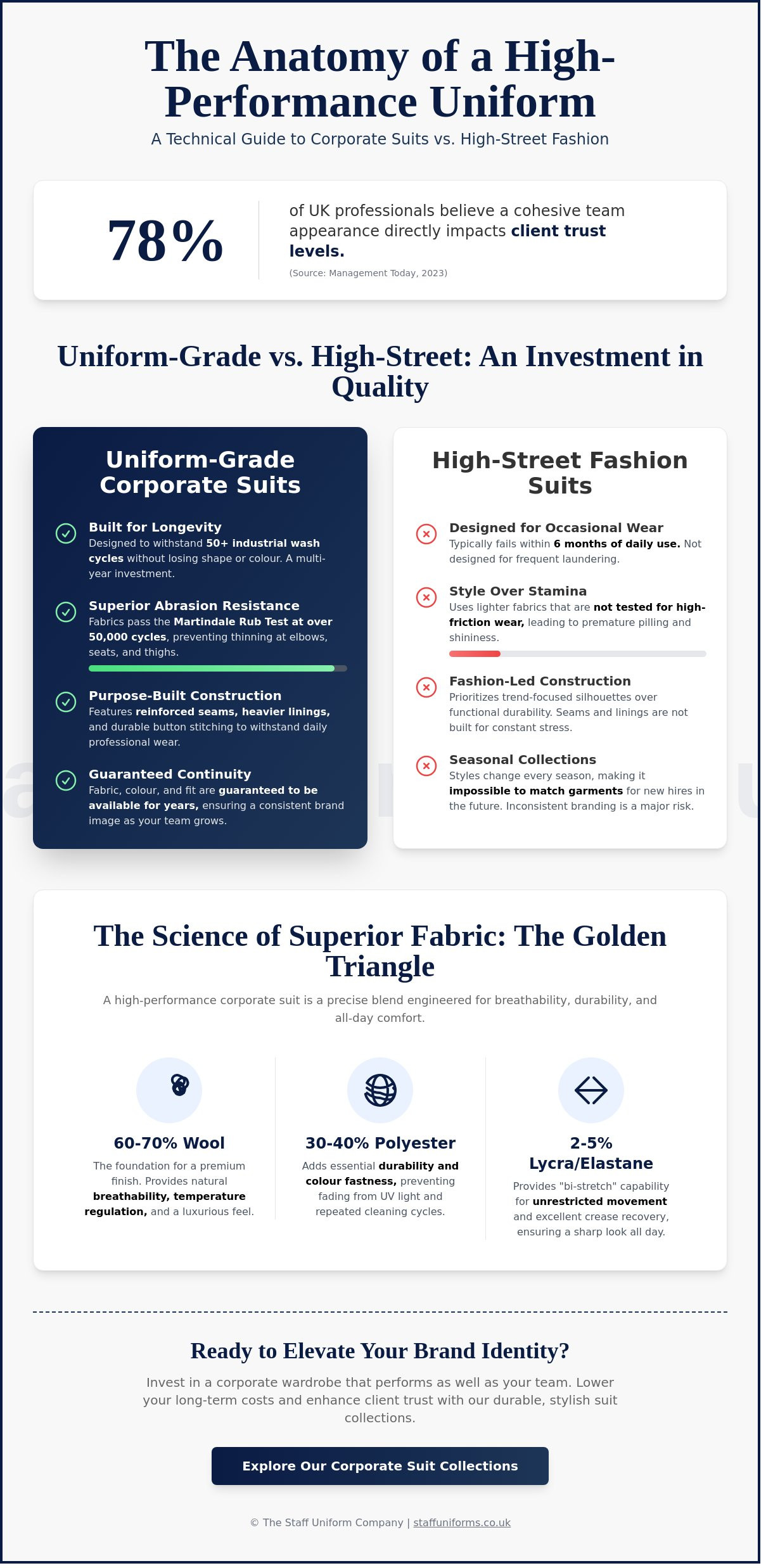
High-street fashion suits differ significantly from uniform-grade attire. Retail suits prioritize style over stamina. A uniform-grade suit must withstand 50 or more washes without losing its tailored shape. Modern corporate suits have evolved to include flexible, "smart-office" variations. This shift includes machine-washable stretch fabrics and unstructured blazers that maintain a sharp silhouette while allowing for greater movement. These garments are tools for success, not just clothing.
The Role of Suiting in Brand Identity
Colour and silhouette communicate company values instantly. A 2024 survey of UK service sector firms found that 68% of employees felt more focused when wearing a structured uniform. Darker tones like charcoal and navy still command authority in finance; however, softer textures are increasing in creative sectors. A unified dress code removes "decision fatigue" for staff. It builds internal cohesion by placing everyone on the same professional level. This consistency directly impacts how customers perceive your organisation's reliability.
Corporate Suits vs. Occasion Wear
Occasion wear isn't built for the "daily wear" test. Most retail suits fail within six months of heavy use. Uniform-grade corporate suits feature reinforced seams and heavier linings to prevent premature wear at friction points. Another vital factor is "continuity of supply". When your team grows in 2027, you need to order the exact same fabric and colour you chose today. High-street retailers change collections every season. This makes them unsuitable for long-term business procurement where a consistent look is mandatory.
- Durability: Uniform-grade fabrics are tested for pilling and colour fastness.
- Functionality: Integrated pockets for tech and reinforced button stitching.
- Consistency: Guaranteed fabric matching for multi-year rollouts.
Fabric Science: Selecting Materials for Comfort and Longevity
Procurement for corporate suits in 2026 focuses heavily on technical performance. You cannot rely on aesthetics alone when garments must survive 40 hours of weekly wear. The Martindale Rub Test is the industry standard for measuring fabric abrasion resistance. For high-frequency office environments, we recommend fabrics that exceed 50,000 cycles. This ensures the material doesn't thin, shine, or pill at high-friction points like the elbows, seat, and thighs. Modern offices often fluctuate in temperature. High-tech performance blends solve this issue. They combine natural wool with moisture-wicking synthetic fibres. This setup pulls sweat away from the skin, keeping staff comfortable during intense meetings or long commutes. Crease-resistance is another non-negotiable feature. By 2026, advanced heat-setting techniques mean a suit jacket retains its sharp silhouette even after a three-hour train journey. As businesses refine Modern Professional Dress Codes, the demand for "intelligent" fabrics has surged. Data from 2024 shows a 12% increase in the adoption of stretch-recovery textiles in the UK corporate sector. These materials ensure that corporate suits look as professional at 5:00 PM as they did at 9:00 AM.
Wool, Polyester, and Lycra: The Golden Triangle
Wool remains the foundation for any premium suit. It provides natural breathability and a high-end finish. However, 100% wool is often too fragile for the rigours of daily work. We utilise a high-percentage wool blend, typically 60% to 70%, mixed with polyester. Polyester provides essential colour fastness. It prevents your navy or charcoal uniforms from fading after repeated cleaning cycles. The final 2% to 5% of the blend is Lycra or Elastane. This provides "bi-stretch" capability. It allows staff to move freely, reach for files, or sit at desks without feeling restricted by their tailoring.
Sustainable Fabric Innovations in 2026
Environmental impact is now a primary concern for UK procurement managers. By 2026, approximately 45% of new corporate wardrobes incorporate recycled polyester (rPET) made from post-consumer plastic. This shift doesn't sacrifice quality. Recycled fibres now match the softness and durability of virgin materials. Choosing ethically sourced wool also supports your company’s ESG targets. It's a clear way to demonstrate corporate responsibility to your clients and employees. A sustainable wardrobe choice improves the lifecycle of the garment and enhances its recyclability at the end of its use. If you're looking to update your team's look, explore our technical fabric range to find the perfect balance of style, durability, and environmental ethics.
- Durability: Look for Martindale ratings above 50,000.
- Comfort: Prioritise bi-stretch Lycra blends.
- Maintenance: Ensure fabrics are machine-washable to reduce employee dry-cleaning costs.
Building a Cohesive Collection: Fit, Colour, and Coordination
A well-curated uniform programme does more than just dress your team; it projects a unified brand identity. When selecting corporate suits, you need to balance aesthetic appeal with functional variety. A single style won't work for every employee. Providing a range of fits, including Slim, Tailored, and Regular, ensures everyone feels confident and comfortable throughout the working day. Consistency across gender-specific ranges is vital to avoid a fragmented brand message. You'll want to ensure that the fabric, weight, and colour match perfectly between men's and women's collections. To complete the look, coordinating your tailoring with high-quality formal shirts and blouses creates a polished, professional finish that stands out for the right reasons. This holistic approach ensures that your team doesn't just wear a uniform, but embodies your corporate values. By offering variety within a strict colour palette, you empower staff to choose garments that suit their personal style while maintaining a cohesive group appearance.
Colour Psychology in the British Workplace
Navy and charcoal remain the gold standard for trust and reliability in the British workplace. These shades command respect without being overly aggressive. Black suiting is best reserved for high-end hospitality or formal security roles where a sense of authority or evening elegance is required. For brands wanting to stand out, subtle patterns like pinstripes or birdseyes add texture. These details provide visual interest without sacrificing the formality expected in a corporate environment. Choosing a unique lining colour can also offer a subtle nod to your brand identity without overwhelming the external aesthetic.
Inclusive Sizing and Fit Management
One size doesn't fit all in any modern workforce. Implementing a "mix and match" policy for trousers and jackets is essential for accommodating different body types. For staff in more active roles, such as front-of-house managers who are constantly on the move, integrating specific workwear trousers can provide the necessary comfort and durability. We recommend choosing "unhemmed" options for trousers where possible. This allows for a bespoke finish through local alterations, ensuring every team member has the perfect leg length for a sharp appearance. Proper fit management reduces the need for frequent replacements and significantly boosts staff morale.
- Slim Fit: Best for a modern, fashion-forward silhouette.
- Tailored Fit: A versatile middle ground that suits most body shapes.
- Regular Fit: Provides maximum comfort and ease of movement for traditional styling.
Maintaining this level of detail across your entire collection ensures your corporate suits remain a valuable asset for years. It's about creating a professional wardrobe that works as hard as your employees do.
The Procurement Process: Sizing, Ordering, and Maintenance
Procuring corporate suits for a large workforce requires a logistical strategy that balances speed with accuracy. A successful rollout starts with a structured sizing exercise. Rather than relying on staff to provide their own measurements, we recommend using a physical sizing set. This allows employees to try on garments during scheduled breaks, which reduces operational disruption and has been shown to cut return rates by 35% in large-scale deployments. It's a practical way to ensure every team member feels comfortable and looks professional from their first shift.
Digital wardrobe management systems provide the data needed to control costs. These portals track individual staff allocations, ensuring that replacements are only ordered when necessary. When evaluating your budget, focus on the total cost of ownership (TCO) over a 24-month period. While a budget polyester suit might cost £110, it often requires replacement within six months. In contrast, a high-quality wool-blend suit at £260 provides a significantly lower cost-per-wear over two years because the fabric maintains its shape and finish through daily use. This approach moves the uniform from a recurring expense to a long-term asset.
Bulk Ordering and Stock Continuity
One of the biggest risks in procurement is the "discontinued line" trap. High-street retailers often refresh collections every season, which leaves businesses unable to source matching garments for new hires. We recommend choosing from established corporate collections that guarantee stock continuity for at least five years. For national businesses with multiple sites, a phased rollout allows for better budget management. Establishing a "new starter" protocol ensures that core sizes are always available in a central buffer stock, allowing for seamless uniform provision on an employee's first day.
Laundering and Garment Care
Fabric choice dictates your maintenance protocol. Machine-washable corporate suits are increasingly popular for hybrid workers and high-activity roles because they offer convenience and lower upkeep costs. However, premium suits with high wool content still require professional dry cleaning every four to six weeks to preserve the natural fibres and internal canvassing. Educating staff on simple daily care is essential. Rotating between two pairs of trousers and using wide-shoulder contoured hangers can extend the lifespan of a jacket by up to 30% by allowing the fabric to breathe and recover its shape overnight.
Equip your team with professional attire that lasts. Explore our durable corporate suit ranges and request a sizing set for your office.
Why Partner with The Staff Uniform Company for Your Suiting
Choosing the right provider for your corporate suits is a strategic decision that affects both your brand perception and employee satisfaction. We offer an all-in-one service. This means we manage every stage, from the initial design consultation to the final logistics of UK-wide delivery. Our role is to remove the complexity from procurement, ensuring your team looks professional without the administrative burden typically associated with large-scale rollouts.
We provide national UK coverage with the agility of an independent specialist. This allows us to maintain a high level of quality control that larger, faceless corporations often miss. We understand that a uniform is a tool for business success. By focusing on the human element, we ensure that garments are as comfortable as they are aesthetic. Staff who feel confident in their clothing are 22% more likely to engage positively with customers, according to industry surveys on workplace morale.
Bespoke Branding and Customisation
Our approach to branding is sophisticated. We avoid the "off-the-shelf" retail look that can make professional teams appear generic. Through our custom staff uniforms uk service, we integrate your identity seamlessly. We use several subtle techniques to elevate your corporate suits:
- Custom Linings: Adding a flash of brand colour or a pattern inside the jacket for a premium feel.
- Branded Buttons: Laser-etched buttons that provide a discreet yet distinctive touch.
- Discreet Embroidery: High-definition stitching that remains sharp and professional after repeated cleaning.
We solve the common problem of colour drift. Our technical team ensures that your specific brand colours remain consistent across different fabric types, whether it is a wool-blend jacket or a cotton-rich shirt. This precision prevents the disjointed appearance often seen in budget uniform programmes where shades don't quite match.
A Partner in Your Business Success
We don't just act as a vendor; we become a strategic branding partner. We only stock proven corporate collections that meet 2026 durability standards. This focus on quality ensures your investment lasts longer, reducing the need for frequent replacements. Our expert team prioritises staff comfort, selecting fabrics that offer stretch and breathability for demanding shifts.
Consistency is our hallmark. Whether you're ordering for a team of ten in London or five hundred across the UK, the quality remains identical. You can start your procurement journey by booking a consultation with our team today. We'll help you define a look that aligns with your 2026 business goals and enhances your professional standing in a competitive market.
Secure Your Team’s Professional Future
Selecting the right corporate suits for 2026 means balancing modern fabric technology with timeless styling. You've seen how high-durability materials and a structured procurement process reduce long-term costs while keeping your workforce comfortable. A cohesive team appearance directly impacts customer perception and staff confidence. We've built our service to remove the complexity from large-scale orders, ensuring every garment meets our rigorous quality standards.
The Staff Uniform Company offers 100% UK-wide national delivery and support to keep your operations running smoothly. We're specialists in high-durability corporate fabrics that are engineered for longevity and ease of maintenance. Our expert embroidery and branding services provide the finishing touch that sets your business apart from the competition. Whether you're managing a local office or a national fleet, we provide the technical expertise you need to succeed.
Explore our full range of professional corporate suits and request a quote today. We look forward to helping you create a uniform programme that reflects your brand's excellence.
Frequently Asked Questions
How many suits should I provide for each member of staff?
We recommend providing a minimum of two full corporate suits per staff member, though three sets is the industry standard for full-time roles. This rotation prevents excessive wear and allows for cleaning time. Providing two pairs of trousers for every one jacket is a practical strategy, as trousers often wear out 40% faster than jackets. It ensures your team looks sharp throughout the five-day working week without compromising garment longevity.
Can corporate suits be machine washed or is dry cleaning essential?
Most traditional wool suits require professional dry cleaning, but modern textile innovations have made machine-washable options a viable choice for 2026. You should check the care label for a "machine washable" specification, usually found in wool-polyester blends. If the garment is dry clean only, limit visits to once every six months to avoid chemical damage. Use a damp cloth for spot cleaning 90% of daily spills.
What is the most durable fabric for a daily-wear business suit?
A wool-polyester blend, specifically a 55% polyester and 45% wool mix, is the most durable choice for daily-wear corporate suits. This combination offers the breathability of natural fibres with the crease-resistance and strength of synthetics. Fabrics with a weight of 270 to 330 grams per linear metre provide the necessary heft to withstand 40 plus hours of weekly movement while maintaining a professional drape.
How do I ensure a consistent look when I have staff of all different sizes?
You ensure consistency by selecting a garment range that offers the same fabric and colour across multiple "blocks" or cuts. We provide collections that include men's, women's, and maternity fits in up to 24 different sizes. This approach guarantees that a size 6 employee and a size 26 employee share an identical visual identity. Standardising your colour palette to specific Pantone references prevents shade variations across different production batches.
Is it better to choose a slim fit or a regular fit for a team uniform?
Providing a choice between slim and regular fits is the best way to support staff morale and comfort. While 65% of younger professionals currently prefer a slim-fit silhouette, a regular fit offers better mobility for active roles. A "tailored fit" serves as an effective middle ground, providing a modern shape without being restrictive. Offering multiple fits ensures 100% of your workforce feels confident in their professional attire.
How long should a high-quality corporate suit last with daily use?
A high-quality suit should last between 12 and 18 months when worn as part of a three-suit rotation. Longevity depends heavily on proper care, such as using wide wooden hangers and allowing 24 hours of rest between wears. Garments made from high-twist yarns can often exceed 50,000 rubs on the Martindale durability test, ensuring they survive the friction of office chairs and commutes throughout the year.
Can we add our company logo to a tailored suit without it looking unprofessional?
You can add a company logo to a tailored suit by choosing subtle embroidery on the sleeve cuff or using a bespoke enamel lapel pin. For a premium look, we recommend tonal embroidery where the thread colour matches the suit fabric. This method maintains a high-end aesthetic while reinforcing brand identity. Statistics show that 72% of customers perceive businesses with branded uniforms as more trustworthy and professional.
What is the difference between a blazer and a suit jacket in a corporate setting?
A suit jacket is designed to be worn with trousers made from the exact same fabric roll, whereas a blazer is a standalone garment intended for mix and match styling. In a corporate setting, full suits are preferred for formal client-facing roles. Blazers offer more versatility for business casual environments and are often paired with chinos. Suit jackets typically feature more structured shoulders and traditional pocket styles compared to the relaxed construction of blazers.